




Fun End of Year Math Project for 5th Grade Students They’ll Actually Love
Teachers love this because students stay engaged without chaos.
By the end of the year, even your best math lessons can start to lose momentum.
You introduce an activity…
and within minutes, you’re answering:
“Do we have to do this?”
“Is this for a grade?”
That’s usually the sign that students need something different—not just another version of review.
A Project That Actually Works at the End of the Year
One of the most effective ways to keep students engaged at the end of the year is to switch from practice to application.
That’s where this comes in:
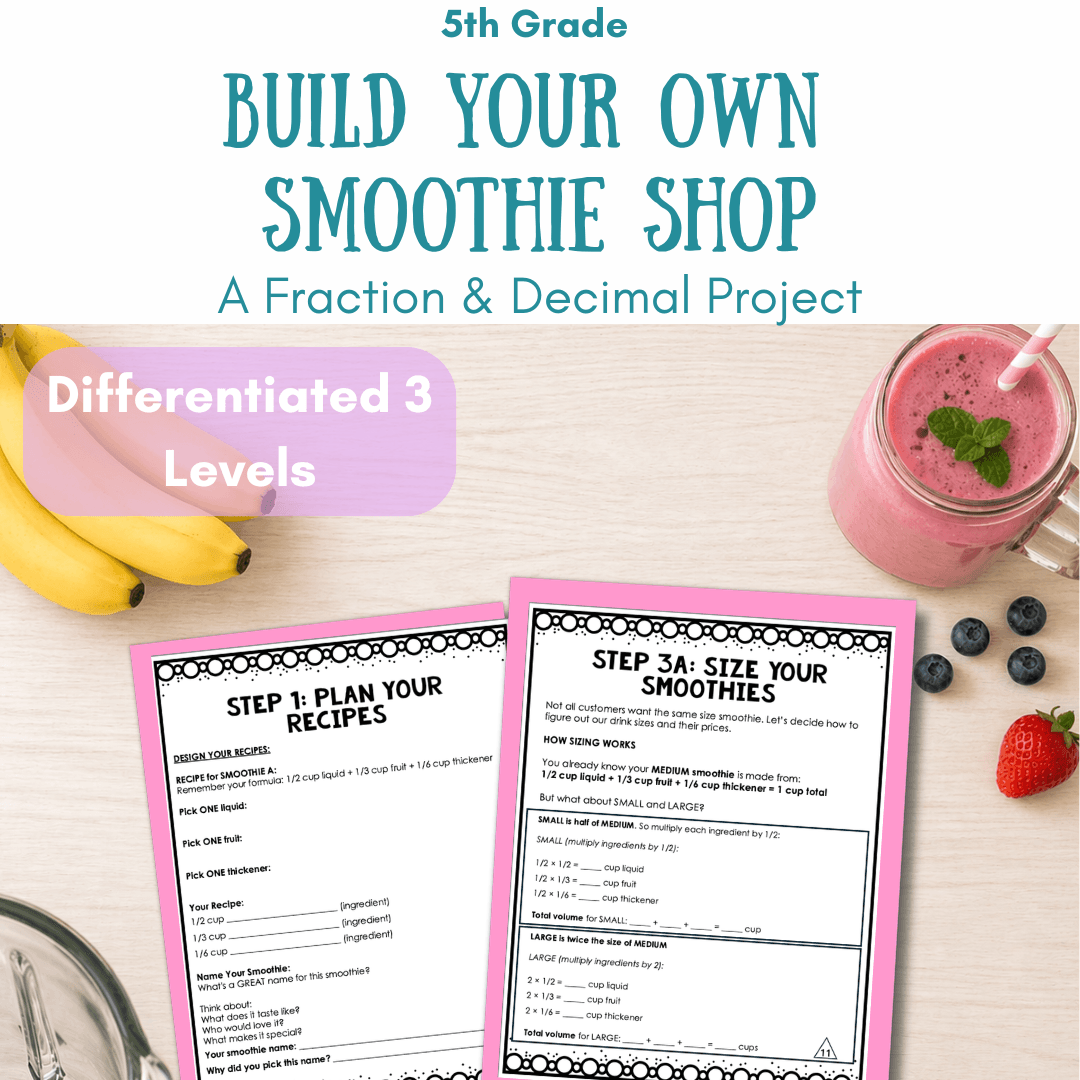
Students create and run their own smoothie business while reviewing key math skills.
It gives them a reason to stay focused—because they’re working toward something.
Why End of Year Math Activities Can Fall Flat
Even strong lessons can feel harder to run this time of year because:
students are mentally checked out
schedules are inconsistent
skill levels are spread out
motivation drops
So when an activity feels repetitive, students disengage quickly.
What Makes This Math Project Work
Instead of completing problems in isolation, students are using math throughout the project.
They’re:
setting prices
working with decimals and fractions
making adjustments
solving problems in context
That shift keeps them thinking—and working—longer.
Skills Covered in This 5th Grade Math Project
This project naturally reviews:
decimal operations (if your students need more practice, you can find additional ideas here → Decimal Activities for 4th Grade)
fraction concepts
multiplication
problem-solving
All within a real-world setup that makes sense to students.
Why Students Stay Focused
There’s a clear difference in how students approach this compared to typical review.
They’re not just finishing work—they’re building something.
Once they get started, you’ll notice:
fewer interruptions
more independence
stronger focus
Built for Real Classrooms (Not Ideal Ones)
End-of-year groups are rarely balanced.
This project works because it gives you flexibility.
You can:
guide students who need support
allow independence for others
keep everyone moving at their own pace
When to Use This End of Year Math Project
This works especially well during:
post-testing weeks
end-of-year review
shortened schedules
enrichment blocks
If you're planning out the rest of your end-of-year schedule, you might also want a few more low-prep options → End of Year Classroom Ideas
Want a Free Decimal Activity, Too?
Grab a free decimal practice resource here:
Final Thoughts
At the end of the year, engagement matters more than anything.
When students see a purpose in what they’re doing, they stay with it longer—and the math practice actually sticks.